FORKLIFT SAFETY GUIDE
Forklift Safety Lights Guide
Forklift safety lights project visible warning cues onto the floor or surrounding area so pedestrians can notice moving industrial vehicles earlier. This guide explains ARC lights, red-zone lines, blue-spot lights and beacons, then shows where each type fits best.
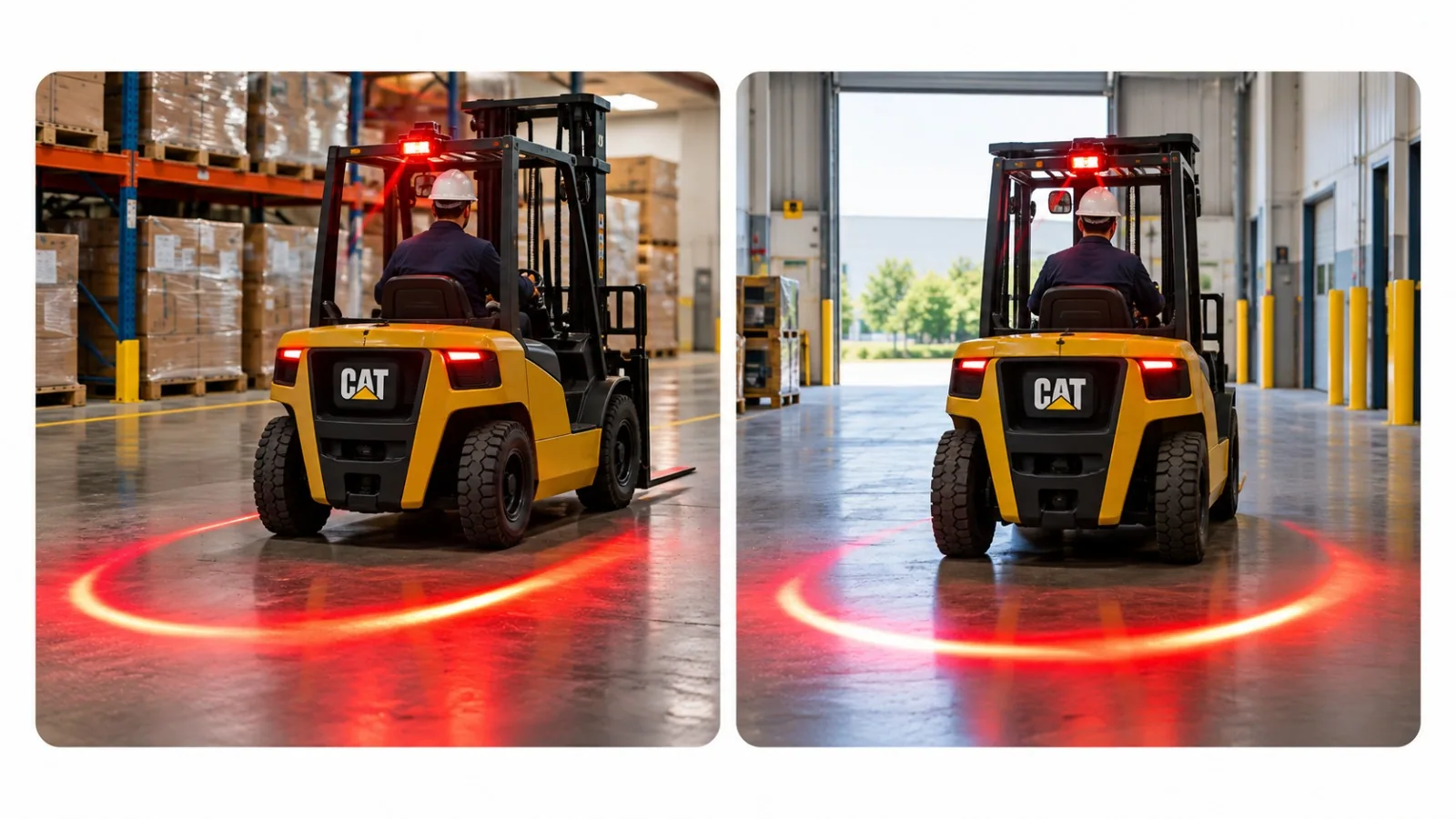
What Are Forklift Safety Lights?
Forklift safety lights are visual warning devices fitted to forklifts and other material-handling vehicles. Depending on the design, they can project a spot, arrow, line, arc or other visible pattern onto the floor. Their purpose is to improve pedestrian awareness around moving equipment, especially in shared warehouse aisles, loading areas and factory traffic routes.
They support a site safety plan rather than replace traffic rules, driver training, horns, mirrors, barriers or pedestrian segregation. The most suitable light depends on the direction of travel, the warning zone required, ambient lighting and the layout of the work area.
Types of Forklift Safety Lights
Forklift ARC Safety Lights
A forklift ARC safety light projects a curved line or arc on the floor near the vehicle. The visible boundary helps pedestrians recognise the forklift operating area and can be aimed to suit a particular side, rear or surrounding warning zone.
Red Zone / Line Lights
Red-zone lights project a straight or shaped warning line beside the forklift. They are commonly used to create a visible no-go boundary along the sides or rear of the truck where pedestrians should keep clear.
Blue Spot / Arrow Lights
Blue spot or arrow lights project a visible marker ahead of or behind the forklift. They are useful where an approaching truck needs to be noticed before the vehicle itself enters a blind corner, crossing or busy aisle.
Beacon / Warning Lights
Beacons provide a visible vehicle alert rather than a floor boundary. They can complement projection lights when a site wants an elevated warning signal on the forklift.
How Forklift ARC Safety Lights Work
An ARC light is mounted on the forklift and aimed toward the floor. Its optics form a curved beam that moves with the vehicle. Instead of relying on a fixed painted floor line, the warning boundary travels with the forklift and stays associated with the moving hazard.
Important: The projected colour does not create a universal safety rule by itself. The site should define what the line means, where pedestrians should stand and how the visual warning fits into the traffic-management procedure.
ARC vs Red Zone vs Blue Spot Lights
| Light type | What it projects | Best suited to | Typical placement goal |
|---|---|---|---|
| ARC safety light | Curved line / arc | Visible operating-zone boundary | Side, rear or surrounding zone |
| Red zone / line | Straight or shaped line | Keep-clear boundary beside vehicle | Vehicle sides / rear |
| Blue spot / arrow | Spot or directional arrow | Advance notice of approaching forklift | Ahead or behind vehicle |
| Beacon | Flashing / rotating visible alert | General vehicle presence warning | Elevated position on vehicle |
Which Forklift Safety Light Should You Choose?
Start with the risk you need pedestrians to recognise. If the main requirement is a moving boundary around the forklift, an ARC or red-zone light is usually the relevant category. If workers need earlier notice that a forklift is approaching from a blind aisle, a blue spot or arrow light may be more useful. Beacons can add a general visible alert but do not mark a floor boundary.
| Site situation | Useful light type to evaluate | Why |
|---|---|---|
| Shared pedestrian and forklift aisle | ARC / red-zone | Creates a visible separation cue close to the vehicle. |
| Blind corner or crossing | Blue spot / arrow | Projects warning into the path before the forklift arrives. |
| Rear-end swing awareness | ARC / side line | Helps show a keep-clear zone around the rear or side area. |
| General moving-vehicle visibility | Beacon | Adds an elevated visual warning signal. |
Forklift Safety Light Colors: Red, Blue and Amber
Forklift safety light colours are usually selected to make a specific warning cue easy to recognise on the site. A red line or arc is often used as a keep-clear boundary close to the truck, while a blue spot or arrow is commonly used as an advance approach warning. Amber or other beacon colours are generally used as elevated vehicle-presence alerts. The meaning of each colour should be defined in the site's traffic-safety procedure rather than assumed to be universal.
Forklift Safety Light Distance and Mounting
There is no single projection distance that suits every forklift, lamp and warehouse. The useful distance depends on the light optics, mounting height and angle, floor colour, ambient lighting, forklift speed and the point where pedestrians need the warning to become visible. Set the projection using the lamp manufacturer's instructions, then verify it on the actual route before finalising the installation.
Forklift Intersection Safety Lights
At blind aisle intersections and cross-traffic points, an advance-warning light can help make an approaching forklift noticeable before the vehicle enters the crossing. Blue spots, arrows, fixed intersection warning systems, mirrors, horns and traffic controls can be combined according to the site risk assessment. The visual cue should support, not replace, safe speed, clear sight lines and pedestrian controls.
Forklift Halo, Surround and Perimeter Lights
Halo, surround and perimeter lighting creates a visible keep-clear zone around more than one side of a forklift. Depending on the product, the projected boundary may use straight side lines, arcs or a multi-sided pattern. These systems are useful where pedestrians can approach from several directions and the site wants a moving visual boundary around the truck.
Forklift Strobe and Beacon Warning Lights
Strobe and beacon lights provide an elevated flashing or rotating warning that helps signal the presence or movement of a forklift. Unlike a floor-projection light, they do not show a precise pedestrian boundary. They are often used together with horns, backup alarms or floor-projection lights where the site needs both general visibility and a defined warning zone.
Side-Mounted Forklift Safety Lights
Side-mounted forklift safety lights are aimed to project a line or boundary beside the truck. They can help communicate a keep-clear distance along the vehicle sides, especially in shared aisles or loading areas. Mounting must keep the light secure, maintain the required projection and avoid interference with moving parts, loads or the operator's view.
Forklift Pedestrian Safety in Warehouses
Visual warning lights are most useful when they reinforce clear pedestrian routes and vehicle rules. They can help in noisy areas where a horn may be missed, in busy aisles where forklifts appear from behind racks, and around loading or production zones where workers and material-handling equipment share the same floor.
For stronger results, combine visible warning cues with marked walkways, mirrors at blind corners, speed management, operator training and physical separation wherever practical.
Installation and Mounting Considerations
- Choose a mounting point that keeps the projected pattern visible without obstructing the driver.
- Aim the light so the warning zone is meaningful for the actual traffic route.
- Confirm the forklift electrical supply matches the light input range.
- Use a secure bracket and re-check alignment after installation or maintenance.
- Keep the lens clean so the projected warning remains easy to see.
- Test the pattern under the actual warehouse lighting conditions before finalising the position.
Before Installation: Quick Site Checklist
Selection should be based on the actual forklift and traffic route rather than wattage alone. Before installation, verify the points below so the projected warning is visible, understandable and compatible with the vehicle.
Vehicle supplyConfirm the forklift DC voltage is within the light's supported input range.
Warning directionDecide whether pedestrians need a side boundary, rear warning or advance warning.
Floor visibilityCheck floor colour, ambient light and reflections where the projection will appear.
Pedestrian routePosition the warning cue where people actually approach or cross the forklift path.
Mounting positionKeep the lamp secure, aimable and clear of moving parts or driver sight lines.
Site ruleDefine what the projected colour or line means in the local traffic-safety procedure.
Common Mistakes When Choosing Forklift Warning Lights
- Choosing only by wattage: projection pattern, mounting position, voltage and floor visibility can matter just as much as power.
- Using the wrong warning pattern: a blue spot used for approach warning does a different job from an ARC or red-zone boundary close to the vehicle.
- Ignoring the floor and ambient light: the same colour can appear differently on dark, bright or reflective industrial floors.
- Mounting without a site test: a good light can still be ineffective if the angle, distance or projected position is wrong.
- Treating the light as the complete safety system: warning lights should support traffic rules, training, marked routes and physical segregation where required.
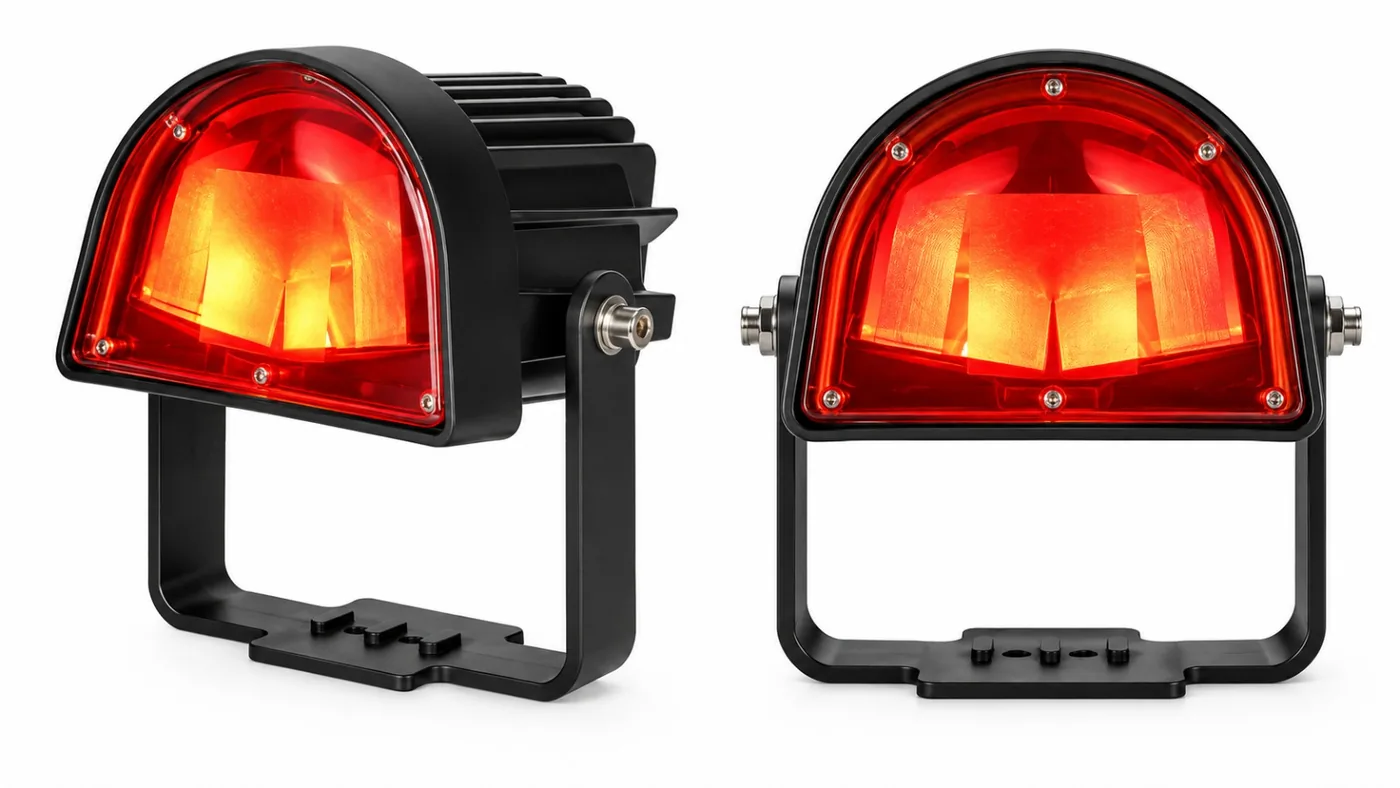
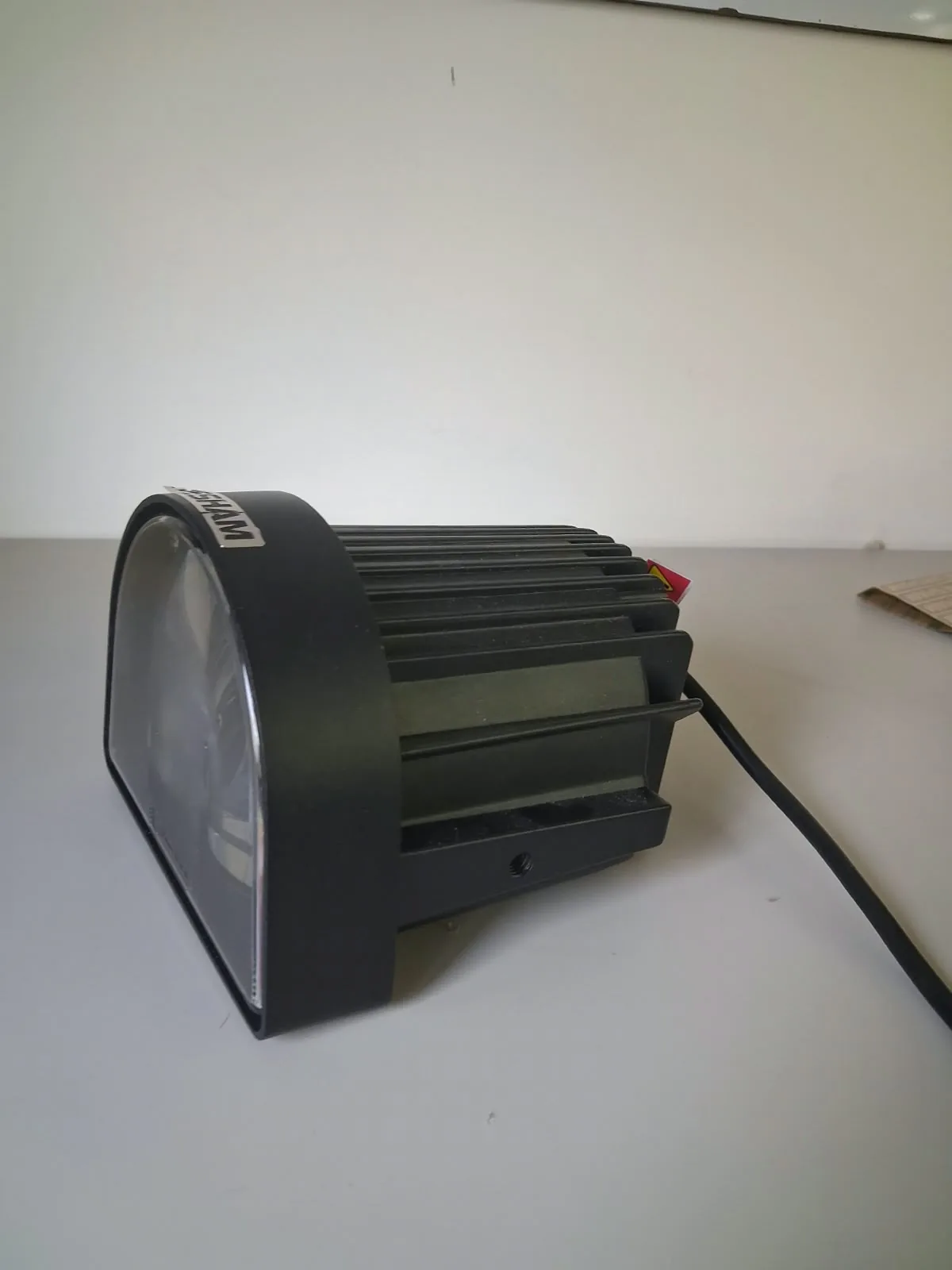
Example: HIS-LED-FLW-022 Forklift ARC Safety Light
The Hesham HIS-LED-FLW-022 is a 40W forklift ARC safety light designed to project an arc / curved line on the floor. It operates from 10–80V DC, uses an aluminium housing with black finish, has IP67 protection and is available with red, green or blue projection colours.
| Model | HIS-LED-FLW-022 |
|---|---|
| Power | 40W |
| Input voltage | 10–80V DC |
| Projection | Arc / curved line |
| Available colours | Red, green or blue |
| Housing | Aluminium, black finish |
| Protection rating | IP67 |
| Warranty | 1 Year Offsite Warranty |
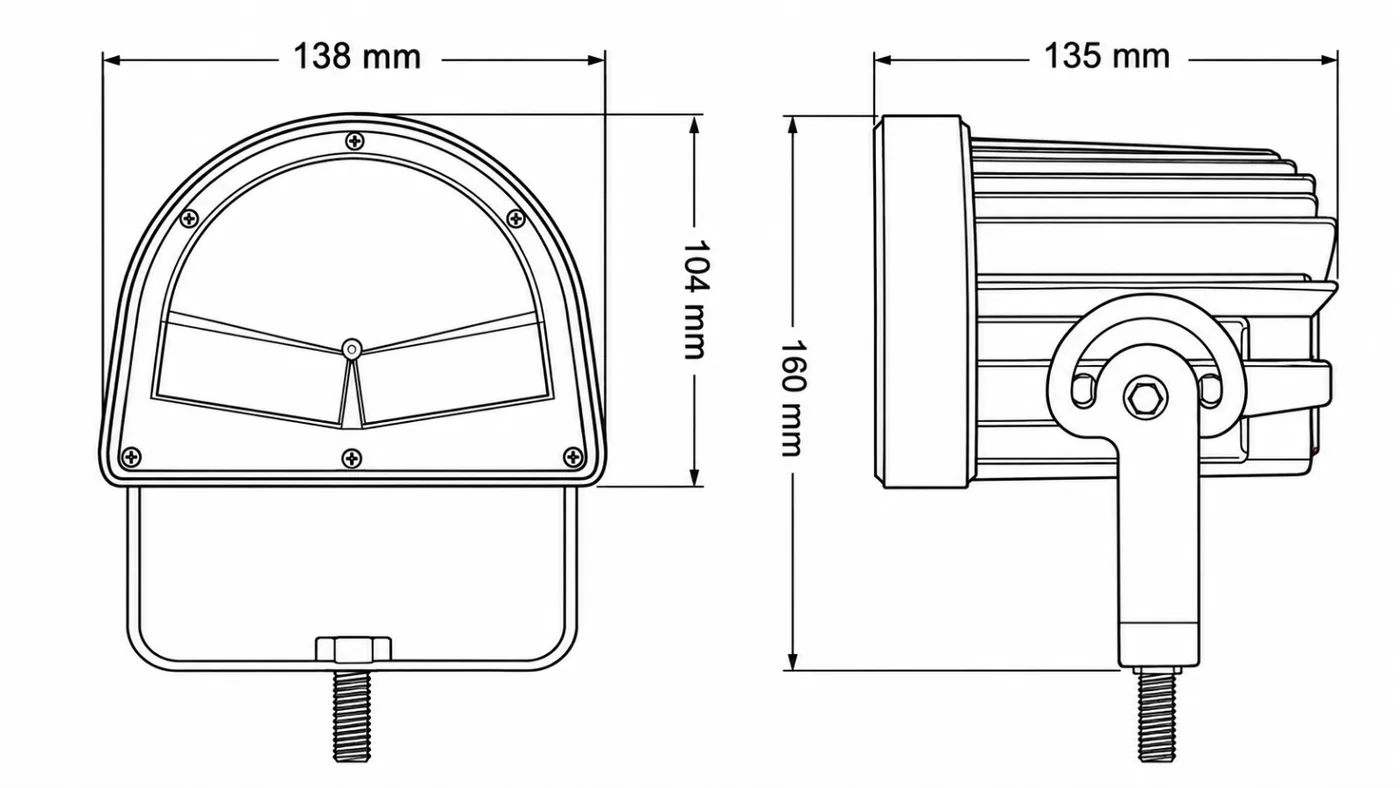
| Drawing dimensions | 138 mm width × 160 mm overall height × 135 mm depth |
Frequently Asked Questions
Clear answers to common questions about forklift warning lights, colours, mounting and pedestrian-safety applications.
What are warning lights on a forklift?
They are visual warning devices used to make a forklift or its movement easier for pedestrians to notice. Depending on the model, they may project floor lines, arcs, spots or arrows, or use an elevated beacon or strobe.
What does a red forklift warning light mean?
There is no single universal meaning for every red forklift light. On many sites a red line or arc is used as a keep-clear boundary, but the site should define the meaning in its traffic and pedestrian-safety rules.
What is a forklift ARC safety light?
It is a floor-projection warning light that creates a curved visual line near a forklift to indicate an operating or keep-clear area.
What is the difference between an ARC light and a blue spot light?
An ARC light creates a curved boundary close to the forklift, while a blue spot or arrow usually projects farther ahead or behind to warn people that a forklift is approaching.
What color should a forklift safety light be?
The useful colour depends on the warning purpose, floor visibility and the site's defined traffic rules. Red is commonly used for close keep-clear lines or arcs, while blue is commonly used for advance spot or arrow warnings. The site should document what each colour means.
How far should a forklift warning light project?
There is no universal distance for every forklift and lamp. Projection should be set using the light manufacturer's guidance and then verified on the actual site, considering mounting height, angle, floor visibility, traffic speed and where pedestrians need the warning.
What is a forklift intersection safety light?
It is a visual warning used around blind crossings or aisle intersections to make approaching forklift traffic easier to notice. It can be a vehicle-mounted projection light or a fixed warning system, depending on the site design.
What are forklift halo or surround safety lights?
Halo or surround lights create a visible perimeter around multiple sides of a forklift using lines, arcs or other projected patterns. They are used where pedestrians may approach from several directions.
Are forklift strobe lights the same as projection safety lights?
No. A strobe or beacon gives an elevated flashing warning of vehicle presence, while a projection light creates a visible spot, arrow, line or arc on the floor. A site may use both for different warning purposes.
Where are side-mounted forklift safety lights used?
They are commonly aimed along the sides of the truck to create a visible keep-clear line beside the vehicle in shared aisles, production areas or loading zones.
Are forklift safety lights required by OSHA?
OSHA requires powered industrial trucks to have an operator-controlled sound-producing warning device, and OSHA guidance discusses warning lights, flashing lights and backup alarms as useful safety devices and pedestrian-warning aids. Whether a specific projection light is required depends on the applicable workplace requirements, equipment configuration and site hazard controls.
Can forklift warning lights replace barriers or pedestrian walkways?
No. They should support the site safety system, not replace physical segregation, marked walkways, training, speed control or other required controls.
Related Forklift Safety Products
These related ARC warning-light models use different power levels and configurations. Open the product page to review the current specifications before selecting a model for a forklift.
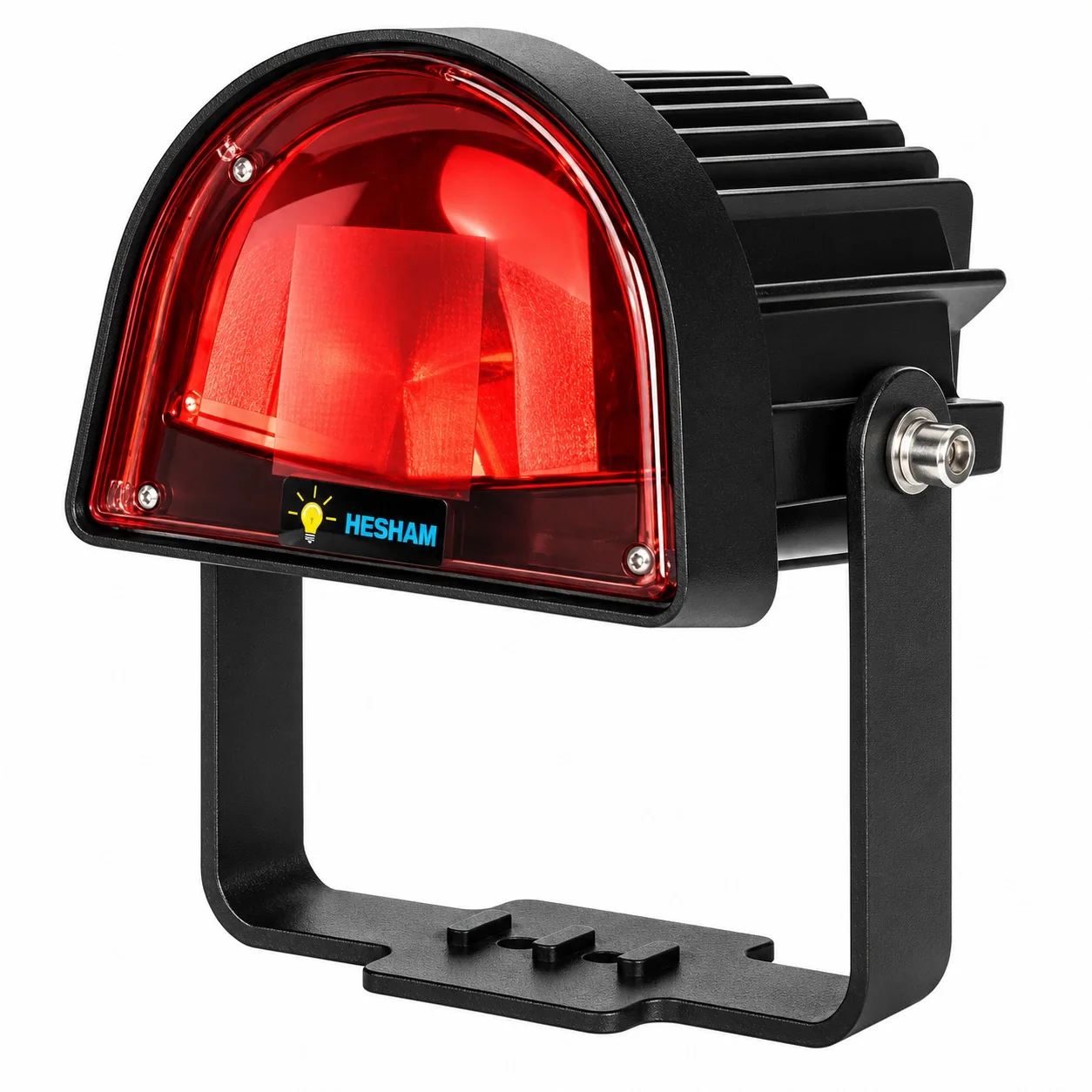
Forklift Arc Safety Light
40W ARC / curved-line warning light, model HIS-LED-FLW-022.
View Product →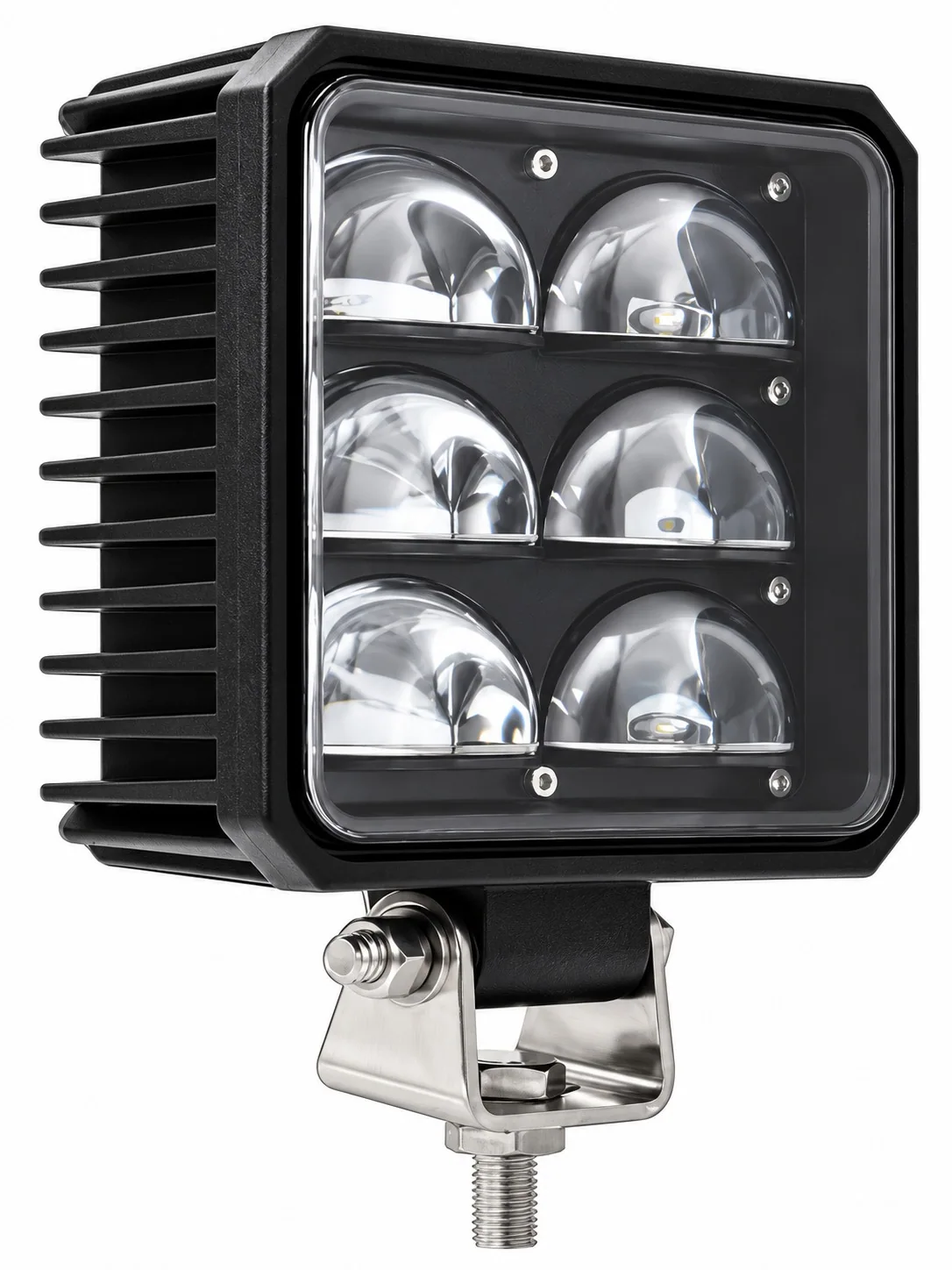
Forklift ARC Safety Light 18W
18W ARC / curved-line warning light for compatible forklift applications.
View Product →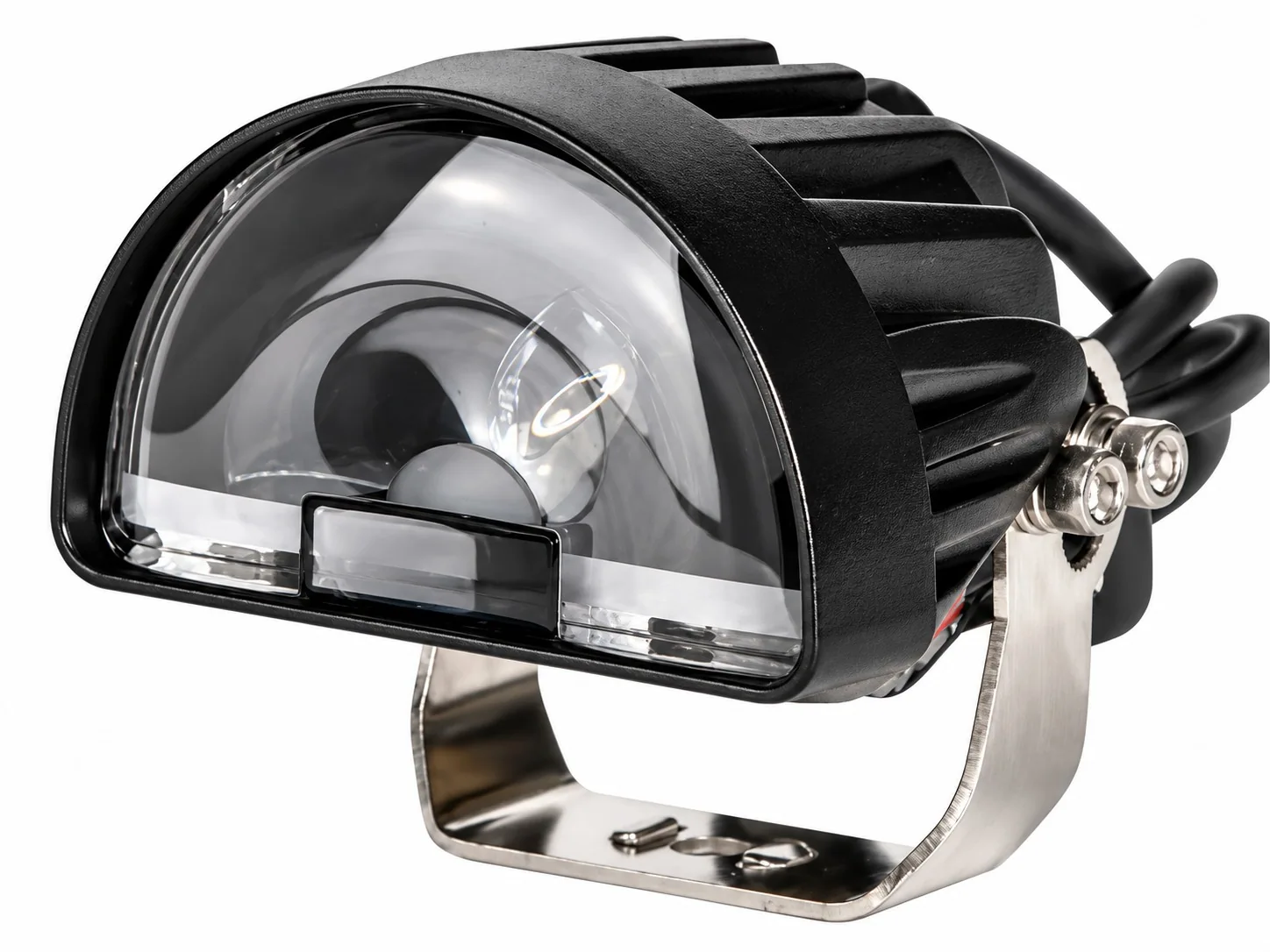
Forklift ARC Beam Warning Light 20W
20W ARC beam warning light with curved floor projection for industrial vehicle applications.
View Product →Need help selecting a forklift safety light?
Share the forklift voltage, operating area and the warning zone you want pedestrians to see.