FORKLIFT AI SAFETY GUIDE
The Ultimate Forklift Pedestrian Detection Guide: AI Cameras, Collision Alerts & Auto-Stop Explained
A practical, buyer-focused guide to forklift pedestrian detection systems for warehouses, factories and industrial vehicles. Understand tagless AI cameras, danger zones, blind-spot coverage, operator warnings, UWB alternatives, retrofit installation and when speed reduction or automatic stopping can be engineered safely.
AI pedestrian detectionForklift camera systemBlind-spot warningCollision preventionOptional speed control
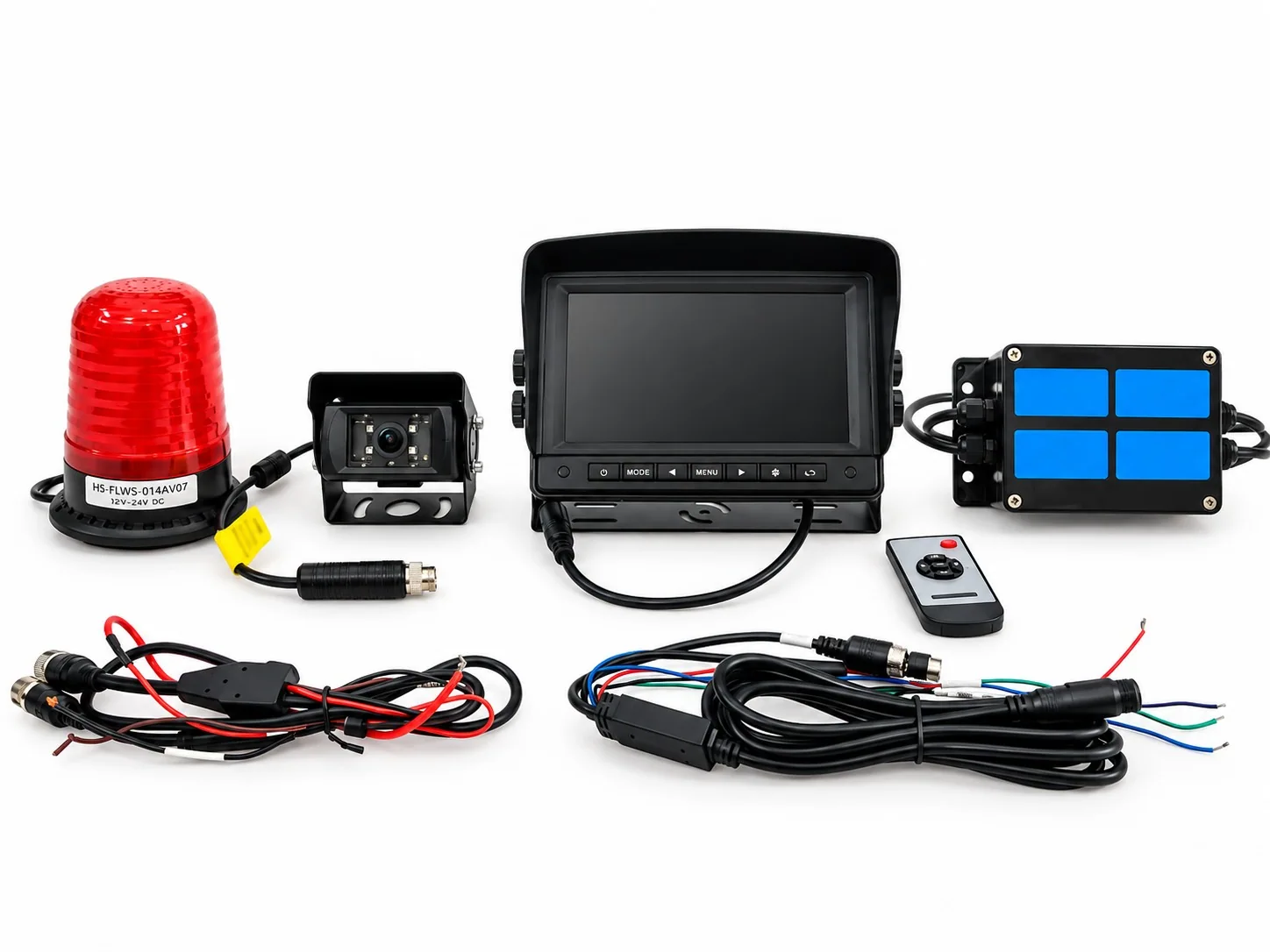
What Is a Forklift Pedestrian Detection System?
Quick answer: A forklift pedestrian detection system monitors the area around a forklift or industrial vehicle, identifies people entering a configured risk zone and warns the operator before a close interaction becomes a collision. Detection can be camera-based AI, UWB/RFID proximity technology, radar or a layered combination.
The important distinction is between detection, warning and vehicle intervention. A camera can detect a person. A monitor, buzzer or beacon can warn the driver. Automatic slowdown or stopping requires an additional, compatible vehicle-control interface and a site-specific engineered design. Those three functions should never be treated as the same thing.
For factories and warehouses in India, buyers commonly search for terms such as forklift pedestrian detection system, forklift AI camera, forklift collision avoidance system, forklift safety camera, human detection camera for forklift and forklift auto stop system. In practice, all of these searches lead back to one question: how do you make a forklift operator aware of a person who is hidden, approaching or too close?
Why Pedestrian Detection Matters Around Forklifts
Forklift incidents rarely come from a single cause. Visibility changes when the truck reverses, carries a tall load, turns near racking, exits a trailer, crosses a pedestrian aisle or works in a noisy production area. The operator may be looking in the travel direction while a person approaches from the side. A worker may assume the driver has seen them when the mast, load or truck body blocks the view.
Rear blind spots
Reversing forklifts can expose pedestrians behind the counterweight or outside the operator's direct view. A rear AI camera can watch this area continuously.
Side approaches
Pedestrians may enter from cross aisles, workstations or rack ends. Side coverage can be added where site traffic creates repeated conflict points.
Front visibility
Raised or bulky loads can obstruct the operator's line of sight. A correctly positioned camera can add another view, but mounting must account for the mast and load movement.
Pedestrian detection should therefore be treated as an additional engineering and awareness layer, not as a replacement for marked walkways, barriers, mirrors, training, speed rules or safe driving.
How an AI Forklift Pedestrian Detection Camera Works
1. Camera captures the risk area
A rugged vehicle-mounted camera watches the front, rear or side of the forklift. The installation angle should expose the actual pedestrian conflict zone rather than simply producing a good-looking video image.
2. AI identifies visible human forms
Computer-vision software analyses the video and looks for people. A useful industrial system should focus on human detection rather than raising the same alarm for every pallet, rack, cone or static object.
3. Zone logic decides whether the detection matters
The system evaluates whether the detected person is inside a configured monitoring or danger zone. This is where camera calibration, detection distance and application-specific settings matter.
4. Operator receives a warning
The person can be highlighted on the in-cab monitor while an audible warning draws the operator's attention. The purpose is not simply to show video; it is to convert a detected risk into an actionable warning.
5. Optional control output can trigger a vehicle response
Where the forklift and engineered control design permit it, an output may be connected to an approved speed-control or stop workflow. This must be validated for the actual truck, load behavior and site risk; it is not a universal camera feature.
AI Camera vs UWB/RFID vs Radar: Which Forklift Safety Technology Fits?
| Technology | How it detects | Main strength | Main limitation | Best-fit use |
|---|---|---|---|---|
| AI camera | Computer vision recognizes visible people in the image. | Tagless: can detect workers, visitors and contractors in view. | Needs a clear camera view; cannot see through racking or solid obstacles. | Rear/front/side blind spots, yards, aisles, general pedestrian warning. |
| UWB / RFID proximity | Truck and pedestrian devices measure proximity using radio technology. | Can work without direct line of sight and around some obstacles. | Pedestrians normally need to carry a tag and keep it charged/managed. | Dense racking, blind intersections, controlled workforces. |
| Radar | Radio sensing detects objects and distance/motion. | Useful in dust, darkness and poor visibility. | Human classification and nuisance-object filtering depend on system design. | Outdoor, harsh or low-visibility environments; layered safety. |
| Layered system | Combines AI vision with UWB, radar or fixed-site controls. | Covers different failure modes and complex sites. | Higher integration effort and cost. | High-risk mixed traffic and complex industrial operations. |
There is no single technology that wins every site. Current market leaders explicitly separate camera-based tagless detection from UWB systems that can detect tagged pedestrians without direct line of sight. The right architecture depends on what your risk assessment actually needs.
Warning Zones, Danger Zones and Multi-Zone Alerts
A strong forklift pedestrian warning system does more than draw one large rectangle around the truck. Different distances can represent different actions. For example, an outer zone may provide a visual or low-level warning, while a closer zone can trigger a louder alarm or a speed-control request on compatible equipment.
Monitoring zone
A wider area used to create awareness and show the operator that a pedestrian is approaching the truck's operating envelope.
Warning zone
A closer region where audible/visual alerts become prominent and the driver should actively respond.
Critical zone
A site-defined high-risk region where additional control logic may be considered after forklift compatibility and safety validation.
Do not copy another warehouse's distances. Zone distance should consider truck speed, braking characteristics, load, aisle geometry, pedestrian flow, camera position and operator reaction time. A longer detection number is not automatically safer if it creates constant nuisance alarms.
Forklift Blind Spots: Where Cameras Should Actually Look
Camera placement should be driven by risk, not by symmetry. A single rear camera can be the right answer for a truck that mainly reverses out of storage lanes. A front camera may matter more where loads block forward visibility. Side cameras can help at crossing points or where pedestrians approach from workstations.
Rear camera
Useful for reversing paths, docks, rack aisles and parking/turning areas. The Hesham product listing specifies a rear-view detection range of 0.5–12 m.
Front or side camera
Useful where mast/load visibility or cross-traffic is the dominant risk. The current Hesham listing specifies 0.5–20 m for front or side applications.
For multiple blind spots, use additional cameras or a layered solution rather than stretching one camera beyond its practical field of view. Camera mounting should also avoid excessive vibration, impact exposure and frequent obstruction from the mast or attachments.
What AI Algorithm Should a Forklift Pedestrian Detection System Use?
Buyers often ask whether the system uses YOLO, SSD or another named model. The model family matters less than the complete event pipeline and how it performs on the actual site. Because the current Hesham Product 2 documentation does not publish a specific neural-network model name, this guide does not invent one.
Person detection
The vision model should identify a pedestrian in relevant poses, scales and working conditions, while rejecting common non-human objects.
Confidence + temporal logic
One uncertain frame should not always create an alarm. Good systems combine confidence thresholds, tracking or short confirmation logic to reduce unstable warnings.
Zone-based decision
The system should distinguish a person in the image from a person in the actual danger area. Polygon/zone logic makes alerts more meaningful.
For a real deployment, test the system with workers walking, crouching, partially occluded by pallets, approaching from the edge of frame and moving under different lighting. A benchmark on generic internet images is not a substitute for site validation.
How to Reduce False Alarms Without Missing Real Pedestrians
Alarm fatigue can make a technically accurate system operationally useless. If the buzzer sounds continuously whenever anyone is merely visible, operators learn to ignore it. Tuning should therefore focus on risk relevance, not only raw AI confidence.
- Mount the camera so the risk area occupies enough pixels for reliable detection.
- Exclude irrelevant sky, ceiling, distant aisle or stationary work areas from the alert zone.
- Use separate warning and danger distances where supported.
- Use suitable confirmation time instead of reacting to a single unstable frame.
- Test day, night, glare, shadows and warehouse lighting changes.
- Test people partly hidden by racks, loads and truck bodywork.
- Review repeated nuisance events and adjust the zone rather than simply increasing confidence.
- Re-test after changing camera position, mast attachments or site traffic layout.
Forklift AI Camera Installation: A Practical Workflow
Survey the hazard
Identify the exact pedestrian conflict: rear blind spot, cross aisle, loading bay, production cell, yard or front visibility problem.
Choose camera position
Confirm field of view at actual mast/load positions and check that the camera is not likely to be struck during normal operation.
Mount the in-cab display
Place the monitor where the operator can see it without blocking forward visibility or interfering with controls.
Connect power correctly
Verify the forklift electrical supply and use appropriate protection, routing and connectors. The current Hesham camera listing specifies 10–32 V DC camera input.
Configure detection zones
Set the warning area to match the real operating envelope and pedestrian paths, then test with a person approaching from each likely direction.
Validate warnings and optional intervention
Check monitor indication and audio alert first. Any speed-reduction or stop integration should then be validated separately for the compatible vehicle-control architecture.
Hesham Forklift AI Pedestrian Detection System: Current Listed Specifications
The table below uses the current Product 2 information in the Hesham website database rather than generic market claims. Always confirm the final configuration before purchase because project hardware can vary.
REAL PRODUCT REFERENCE
Forklift AI Pedestrian Detection System
Product ID 2 · SKU HIS-FLWS-024AI20M
AI pedestrian detection with a tracking/warning box on the video display, 1080p video output, operator monitor, audible warning and adjustable detection zones.
Open Product Page →| Detection function | AI pedestrian detection with tracking / warning box on the video display |
|---|---|
| Video output | 1080p |
| Front / side detection range | 0.5–20 m |
| Rear detection range | 0.5–12 m |
| Operator display | 7-inch LED monitor |
| Warning | Audio alarm output |
| Detection zones | Adjustable to suit forklift and operating area |
| Camera ingress protection | IP69K |
| Camera input | 10–32 V DC |
| Software upgrade | USB upgrade support |
| Camera operating temperature | −20°C to +70°C |
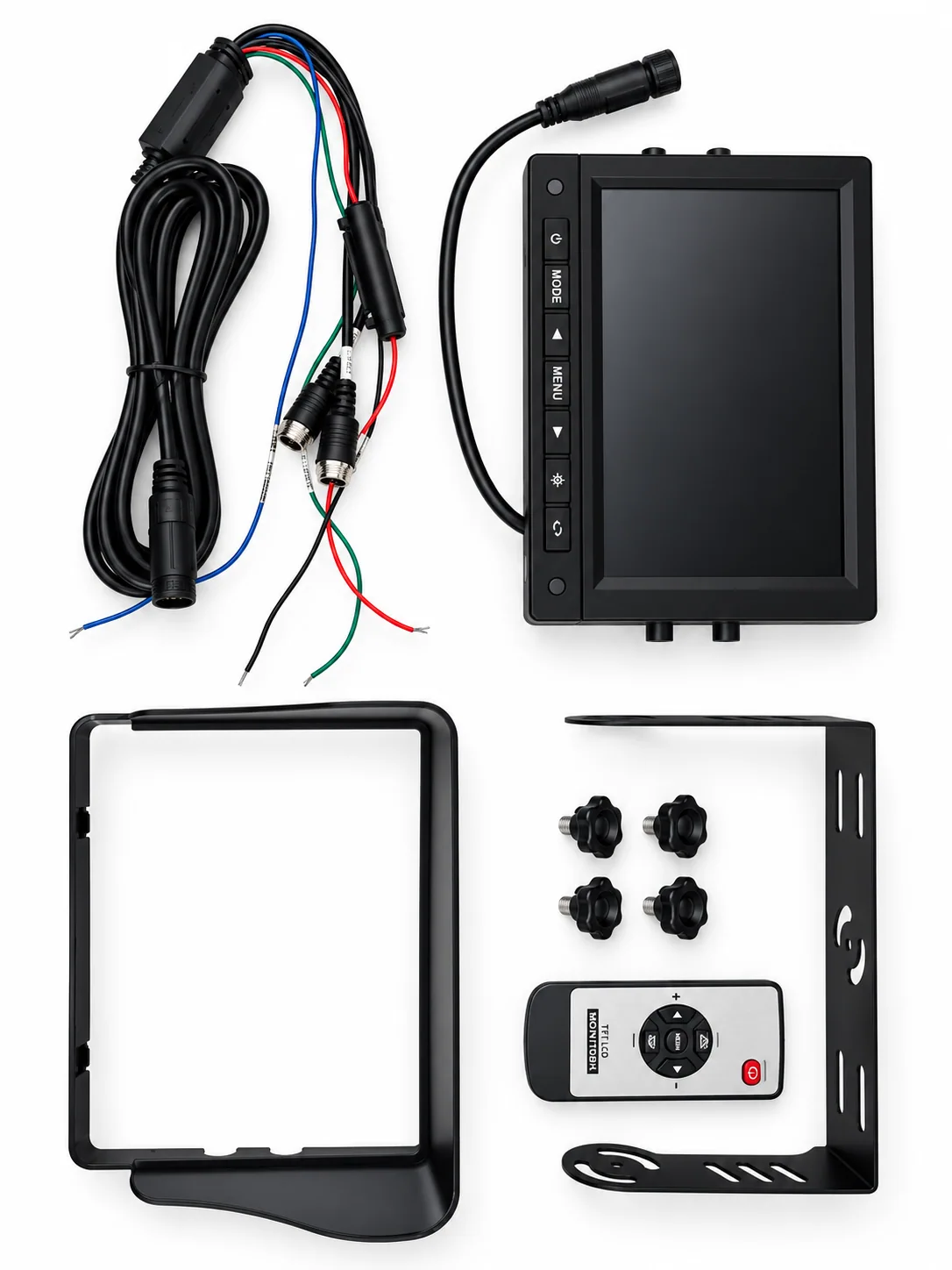
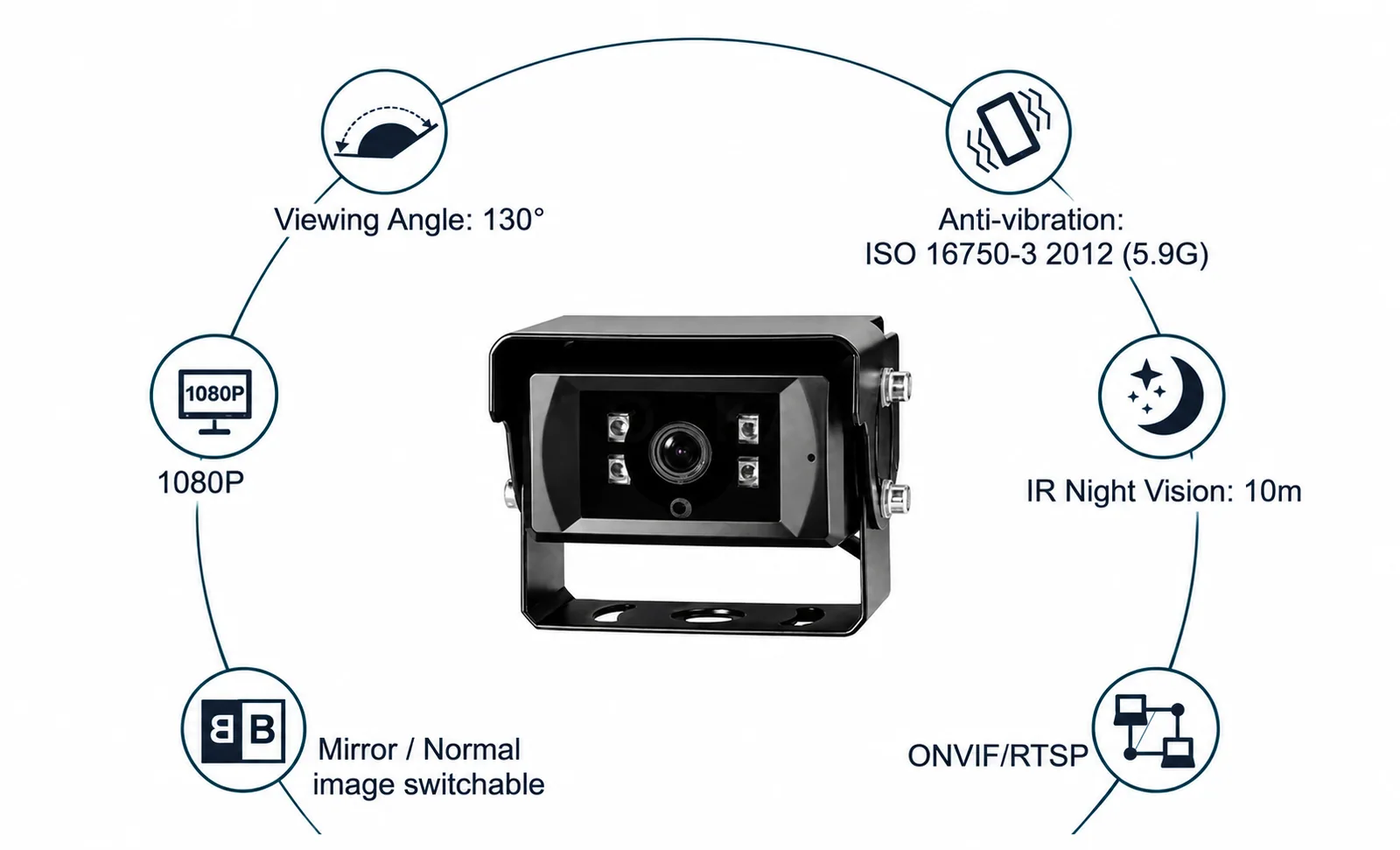
Real Product Images: What the Hardware Looks Like
These are existing Hesham product assets for the current forklift AI pedestrian detection listing. They are product photographs, not claimed customer-installation photos.
Can a Forklift AI Pedestrian Detection System Automatically Stop the Forklift?
Potentially, but only with the right vehicle integration. The AI camera itself is a detection and warning device. Automatic slowdown or stopping needs an engineered interface to the forklift's speed/drive controls and compatibility with the specific truck.
Important safety distinction: “pedestrian detection,” “collision warning” and “automatic stop” are not interchangeable marketing terms. Ask the supplier exactly what happens on your forklift model: warning only, speed reduction, controlled stop, or no vehicle intervention.
Where auto-slowdown is required, commissioning should verify behavior at normal travel speed, reverse travel, turning, different loads and raised-load conditions. Sudden intervention can create a different hazard if the truck, load or operator is not considered in the control design.
Where Forklift Pedestrian Detection Systems Are Used
Warehouses
High rack aisles, cross aisles, picking zones, staging areas and pedestrian crossings.
Manufacturing plants
Material movement between production lines, machine areas, stores and dispatch routes.
Loading docks
Reversing paths, trailer approaches, dock doors and mixed pedestrian/vehicle work.
Outdoor yards
Logistics yards, material storage, scrap areas and plant roads where pedestrians share vehicle space.
Ports and heavy industry
Industrial vehicles working in large mixed-traffic areas with limited operator visibility.
Cold storage / logistics
Fast-moving material handling where visibility, noise and repeated reversing create additional risk.
Forklift Pedestrian Detection System in India: What Buyers Should Check
For Indian factories, warehouses and logistics sites, the best system is not simply the camera with the longest advertised range. Match the hardware to the actual forklift and operating environment. Confirm supply voltage, mounting position, aisle width, indoor/outdoor exposure, dust and washdown conditions, warning audibility, operator display placement and the response expected when a pedestrian enters the danger zone.
For mixed fleets, also confirm retrofit compatibility truck by truck. If the requirement includes automatic slowdown or stopping, treat that as a separate control-integration scope and verify the interface with the exact forklift model before commissioning. Hesham Industrial Solutions' current Product 2 configuration is a camera-based AI pedestrian detection system with a 7-inch monitor, audible warning, adjustable zones and IP69K camera hardware.
How to Choose a Forklift Pedestrian Detection System
Start with the hazard, not the brochure. A useful buying comparison asks the same questions for every supplier.
- Which exact blind spots or conflict zones must be covered?
- Will every pedestrian reliably carry and maintain a wearable tag?
- Do you need tagless detection of visitors and contractors?
- Is line of sight frequently blocked by racking, pallets or walls?
- What range is needed at the truck's real operating speed?
- Does the system support separate warning and critical zones?
- How are pedestrians shown to the driver?
- What happens when multiple people are detected at once?
- What lighting and weather conditions must the camera handle?
- Can the kit be retrofitted to your forklift voltage and mounting space?
- Is speed reduction/stop actually supported on your truck model?
- Can alarms be tuned to avoid constant nuisance warnings?
- What happens if the camera is blocked or disconnected?
- How will the system be tested before fleet-wide rollout?
Site Acceptance Test: What to Verify Before Rollout
Do not approve a pedestrian detection system from one showroom demonstration. A structured site test should cover the situations that create real incidents.
Detection tests
- Pedestrian approaching from center and edge of frame
- Standing, walking, crouching and partial occlusion
- Reverse travel and turning
- Different clothing / PPE combinations
- Multiple pedestrians
- Day, night and glare conditions
Operational tests
- Nuisance alarms near safe workstations
- Camera obstruction or disconnection
- Monitor visibility to operator
- Audibility in noisy areas
- Zone distance at real speed
- Any slowdown/stop behavior under load
Record the test conditions and changes made during commissioning. That gives the EHS/operations team a repeatable reference when camera position, fleet configuration or traffic layout changes later.
Forklift Pedestrian Detection System FAQs
Start with the six questions buyers ask most often. Open any question for the answer, or expand the full FAQ library below.
What is a forklift pedestrian detection system?
It is a driver-assistance safety system that detects people around a forklift or industrial vehicle and warns the operator when a pedestrian enters a configured risk zone. Systems may use AI cameras, UWB tags, radar or a layered combination.
How does an AI pedestrian detection camera work on a forklift?
A vehicle-mounted camera continuously captures the area around the forklift. AI analyses visible human forms, applies configured detection zones and triggers a visual or audible warning when a person enters a defined risk area.
Do AI forklift pedestrian detection systems need wearable tags?
Camera-based AI can detect visible pedestrians without wearable tags. UWB or RFID systems normally depend on a pedestrian tag, but can detect through some visual obstructions where a camera cannot see.
Can a forklift pedestrian detection system automatically slow or stop the forklift?
Some systems can provide an output for speed reduction or stopping on compatible forklifts when the vehicle control architecture and site safety design permit it. A camera alone should not be described as a guaranteed braking system.
What is the difference between a forklift camera and an AI pedestrian detection camera?
A standard camera provides the operator with video. An AI pedestrian detection camera also analyses the image to identify people and generate alerts according to configured zones and logic.
Where should pedestrian detection cameras be mounted on a forklift?
Placement depends on the blind spot and travel direction being protected. Rear, front or side mounting should provide a clear field of view while avoiding obstruction from the mast, load, bodywork or attachments.
What detection range should a forklift AI camera have?
There is no universal best range. It must match vehicle speed, operator reaction time, aisle geometry, camera view and the site's risk assessment. The Hesham system currently lists 0.5–20 m for front or side view and 0.5–12 m for rear view.
Can AI pedestrian detection work in warehouses with blind corners?
Camera AI can detect people only when the camera can see them. For around-corner or through-racking detection, a site may add fixed cameras, UWB proximity technology, mirrors or other engineering controls.
How do you reduce false alarms in forklift pedestrian detection?
Use correct camera placement, confidence thresholds, clearly defined warning zones, temporal confirmation and real on-site testing across shifts, lighting and traffic conditions.
Can forklift pedestrian detection replace pedestrian walkways or training?
No. It should support a wider workplace transport safety program that includes training, traffic separation, speed management, visibility controls and safe operating procedures.
Is AI camera or UWB better for forklift pedestrian safety?
AI cameras are useful for tagless detection of anyone visible in the camera view. UWB can detect tagged people without direct line of sight. The better choice depends on site geometry, wearable compliance, fleet type and the required warning or intervention function.
Can an AI pedestrian detection system be retrofitted to an existing forklift?
Many camera and proximity systems are retrofit-friendly, but power supply, mounting, control interfaces and any speed-control integration must be checked for the specific forklift model.
Is a forklift pedestrian detection camera the same as a forklift dash cam?
No. A forklift dash cam mainly records or displays video, while an AI pedestrian detection camera analyses the live image to identify visible people and trigger configured warnings. If event recording is required, confirm that the selected monitor or recorder supports it.
What should buyers in India check before selecting a forklift pedestrian detection system?
Check the forklift supply voltage, camera mounting space, indoor or outdoor exposure, dust and water protection, required detection range, operator alert method, local installation support and whether any slowdown or stop integration is compatible with the exact truck model.
See the Hesham Forklift AI Pedestrian Detection System
If your primary requirement is a tagless camera-based system with an operator display, audible warning and adjustable detection zone, review the current Hesham product page for the latest configuration and enquiry details.
Planning pedestrian detection for a forklift fleet?
Share the forklift type, voltage, blind spot, operating speed, indoor/outdoor environment and whether you need warning only or a vehicle slowdown workflow.
Related Forklift & Industrial Safety Guides
Editorial & safety note: This guide is educational and product-selection content. Detection performance, stopping behavior and installation suitability depend on the actual forklift, camera placement, environment and integration. AI pedestrian detection is an additional safety layer and does not replace operator responsibility, site risk assessment, traffic segregation, training or required engineered safety controls. Product specifications shown above are taken from the current Hesham website listing for Product ID 2 as of 3 November 2026.